
In November 2022, Tom Braddock, Talent Acquisition Manger from Coleg Sir Gar (Carmarthenshire College) came along to the FE HR Hub Breakfast Club and shared with us the journey and outcomes of a project he led on to overhaul recruitment processes.
Coleg Sir Gar is a large FE and HE Institution located across seven different campuses in Southwest Wales. It has a turnover of circa £40 million. The region that the college serves is extensive, stretching across the counties of Carmarthenshire and Ceredigion. There is heavy industry and manufacturing around Llanelli, but the wider reaches of the community they serve is largely rural, and the college also provides an extensive land-based provision. This poses many recruitment challenges around niche roles. Due to a high proportion of first language Welsh speakers in these parts of Wales, finding candidates with the right occupational skills as well as the ability to deliver in both English and Welsh is challenging. Throw in a wide geographical area with low density rural communities and public transportation limitations, alongside difficulties competing with industry salaries and skills shortages and you start to get a picture of the many and varied challenges that Tom as the newly appointed Talent Acquisition Manager was facing.
Tom joined Coleg Sir Gar in September 2021 with a strong track record working in both agency recruitment, and internal HR teams within the Healthcare and Social Care sectors. It wasn’t long before he identified that a complete overhaul of the college’s recruitment systems was needed to respond to the post Covid changing conditions in the labour market.
Issues identified – Prior to implementing an ATS
Out-dated Recruitment Process
Firstly, the application process was time intensive, with forms either being paper based or having to be downloaded from the website and then completed by hand. There was no online process. The changing labour market conditions post Covid clearly demanded quicker, more agile processes.
The average number of applications per role was very low, and with lots of niche roles, finding a pool from which to shortlist was proving very challenging. They recognised that having a time intensive application process was certainly going to deter busy people who may be working in a niche role from applying.
Plus, candidates’ needs and wants were very different. The importance of employer value proposition including values and benefits was fast becoming a key factor in attracting candidates. A lack of information about the college and the benefits on offer, meant there was very little to sell the college to prospective candidates.
Poor Candidate experience
Tom identified that there was little communication taking place with candidates during the recruitment process. They weren’t communicating with candidates if they were unsuccessful, which meant that based on their experience, candidates were unlikely to re-apply for roles at the college in the future. There were few ‘touch-points’ with candidates throughout the whole process, resulting in high dropout rates. With his experience in internal and agency recruitment, Tom recognised the value of relationship building with prospective candidates. He understood that they needed to be much more proactive in communicating and engaging with candidates to maximise their talent pipeline for the future.
Lack of dedicated specialist resource
In addition, there was a lack of dedicated resource and talent acquisition focus in the HR team. Like many FE Colleges, the HR team was a very busy one, but with no dedicated resource, consequently, nobody was being proactive in engaging with candidates. Their whole process was based on reacting. There was also a lack of resources and materials around the employer brand proposition, and there had been no focus on the candidate experience.
No Ability to report / Track Data
Without automated and digitised processes, they couldn’t track data. They had no data to indicate how candidates were getting to hear about vacancies. The manual processes meant they couldn’t track what was or wasn’t working. They had no talent pool, and onboarding processes were also very unwieldy and time consuming.
Influencing and Partnership
Tom developed a case for the college to invest in an ATS and argued that the time that could be saved through an efficient ATS system would not only give the capability to develop a talent pool but it would also save time across many of the transactional tasks involved in recruitment which could be directed instead proactively towards engaging with candidates and enhancing the candidate experience.
After researching the ATS market, Tom selected PinPoint https://www/pinpointhq.com as their ATS partner. In particular, what influenced their decision to select PinPoint was their ability to tailor the system completely to their needs and specifically to support them in ensuring the system was compliant with their duties under the Welsh Language Act (in Wales, there is a duty to treat both English and Welsh equally by all Public Sector bodies).
The PinPoint platform had excellent integration with lots of job boards, and they were very enthusiastic to develop the system in partnership with Coleg SirGar to ensure it was robust, efficient, and enabled them to fulfil their statutory obligations around the Welsh Language Act.
They worked in partnership for 3-4 months. During this time, they built a careers page, and established internally how they wanted things to look. Challenges were turned into opportunities to innovate and develop solutions.
What’s Happened Since?
At the point of the case-study, the ATS had been implemented for six months.
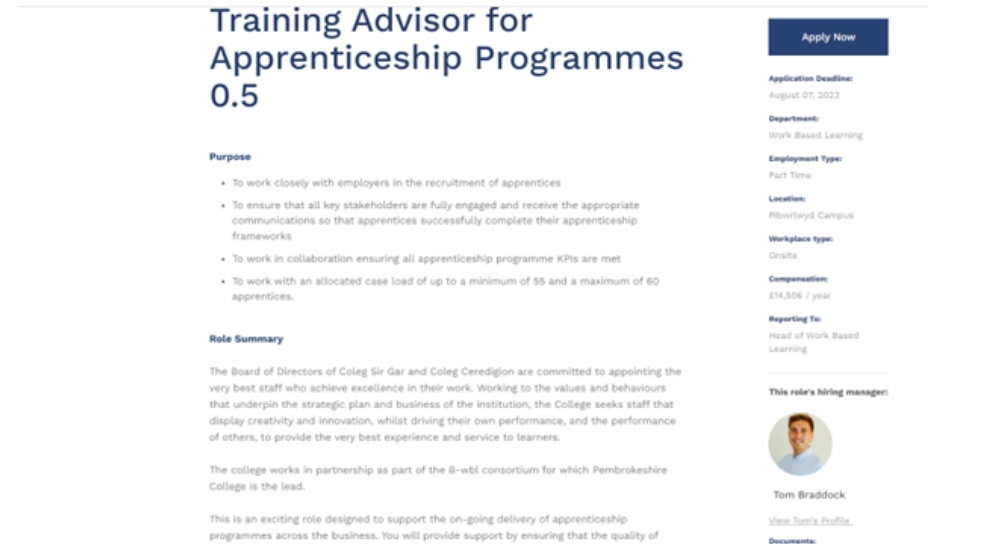
There is now a common template used for each vacancy. Information is presented clearly and easily accessible with each vacancy having its own page showing: –
Key Responsibilities, Essential and Desirable criteria.
Along the right had side is a neat summary of the key information e.g. Application deadline, Department, Employment Type, Location, Workplace Type (e.g. onsite), Compensation, Reporting To, and a list of supporting documents including the Welsh Language level descriptors for each role. And a clear call to action button – Apply Now. A small picture of the hiring manager allows candidates to put a face to the name and contact details to reach out to should they need to.
Candidates don’t have to leave the page – everything is there one place for them. There is also the option for candidates to view the hiring manager profile to find out more about them, this encourages candidates to reach out with any questions and personalises their experience.
The page includes the benefits for the role and further information about the college. All supporting documents are available to view including a colourful 12-page recruitment pack which includes all the particulars of the role, and further information about the college values, benefits, staff testimonials, job description, person specification, Welsh language skills level requirements and an application guide.
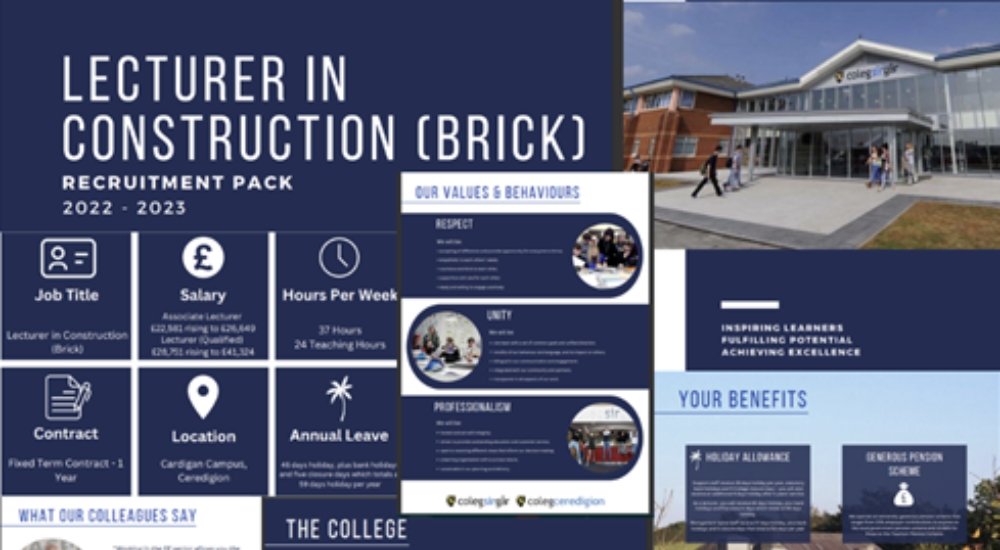
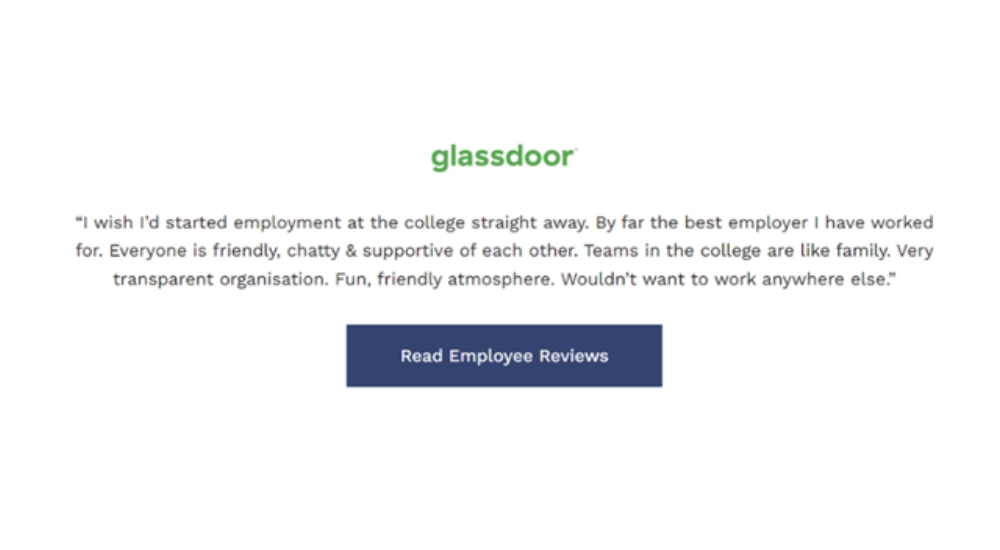
Through the College’s Careers Page, prospective candidates can search for vacancies by campus if they wish. They can register to join the talent pool, and if they have travel restrictions, they can select which campus they are interested in working at. They can also read Employee Reviews that have been posted by candidates / employees on Glassdoor.
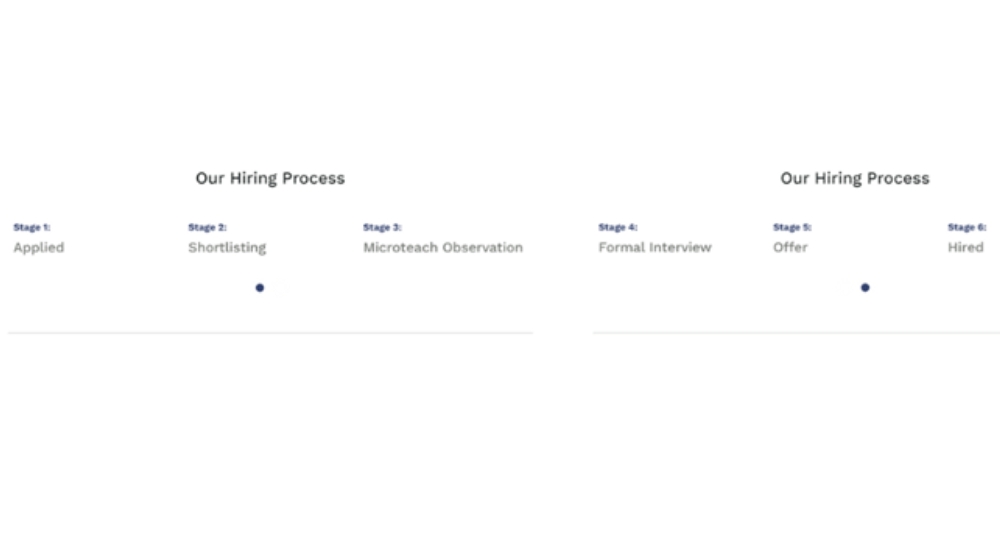
Digitisation of the application form means that candidates can save and come back to it. At the bottom of the vacancy specific page is a helpful feature showing the different stages of the hiring process. It means that candidates know what to expect and when to expect. They can click into it for further information.
Communication
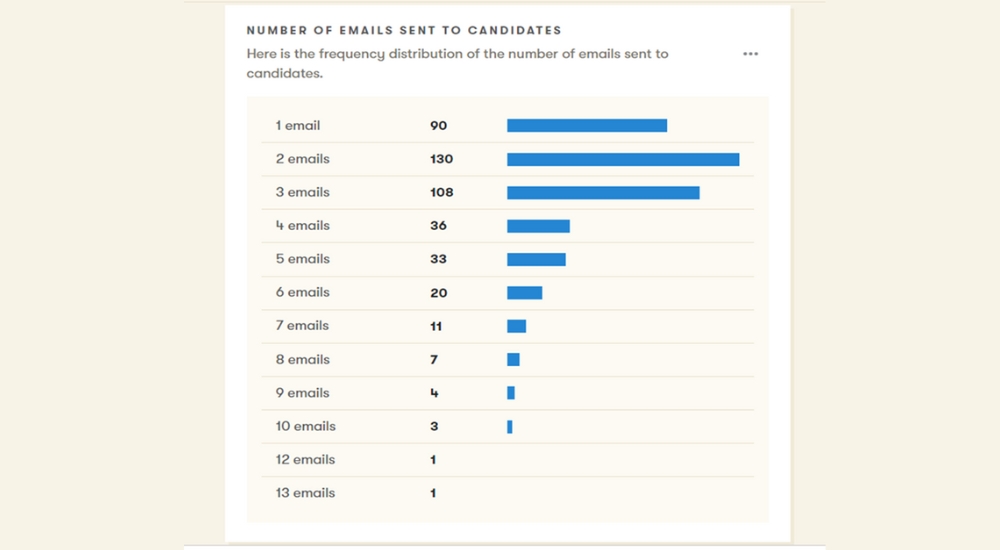
Through setting up template emails and automated feeds, communication with candidates is regular and efficient. All candidates receive at least 2 emails: The first acknowledges their application and the second informs them whether they have been shortlisted or not.
They are also invited to join the talent pool.
Around 21 days after, either rejection or hire, a feedback from is sent out to them asking for feedback of their experience of the process. Helping them to continually review the candidate experience.
Integration
The system integrates with various sites on google, (e.g. Indeed, Monster and FE Jobs)
All roles advertised on the ATS are integrated with Linked In appearing on the college’s linked in page. They have also integrated FE Jobs.
This integration with a range of different job boards, provides the ability to collect and view data relating to which job board applications have originated from. This is now providing valuable information to support budgetary decision making around other recruitment advertising platforms.
Welsh Language – all vacancies are published in both English and Welsh simultaneously and are also integrated through the ATS platform onto relevant Welsh Job Boards.
Reviews
As a result of advertising their vacancies across many more jobs boards, this has led to candidates opting to leave more reviews using sites such as Glassdoor and Indeed. This in turn has helped to promote their employer brand and leads to higher ratings in the algorithms sitting behind the for various job boards. Their Careers Page also features a link through to reviews for prospective candidates to read.
Talent Pools
Candidates can register for the talent pool and upload their CV as well as provide a personal summary. Through a drop-down list they can select what roles and locations would be of interest to them.
In the six-month period from when the ATS system was first implemented 174 candidates registered in the talent pool.
Through the Talent pool, easy to use search fields enables a search function for specific types of roles. E.g. maths and science. This will automatically select those in the talent pool whose application includes the search words.
The talent pool can also be segmented by area, location, campus.
They can use tags to help drill down to manage the database as it grows.
Tags can also be used to flag up if a candidate has failed to show up for an interview.
Through a rating tool, it’s possible to view a candidate’s application history since they have joined the talent pool.
Example given: Lecturer in Horticulture
This role had historically proved to be a very challenging post to appoint to, attracting low numbers of candidates. Tom explained that 1 candidate appeared in the talent pool. Tom contacted that candidate and asked for referrals. It led to 4 candidates who were invited for interview. 2 candidates were offered posts. This demonstrates the value of proactively following up with candidates in talent pools and how through personal networks, others of interest can also be brought into the talent pool for future consideration.
Onboarding
Before they introduced the ATS Onboarding module, their onboarding process was very lengthy.
Typically, it may have taken 14-15 days before candidates had received /and returned their contract and supporting appointment pack. Now, using the digital onboarding capability of their ATS system they are able to make the offer either the same day or the following day. All onboarding documents are uploaded and accessible to the candidate through an email with a link to create a log-in to the onboarding portal. They can download and review their contract and then return it with a digital signature. All other onboarding documentation such as personal details forms, health questionnaire can be accessed quickly and easily by the candidate for completion.
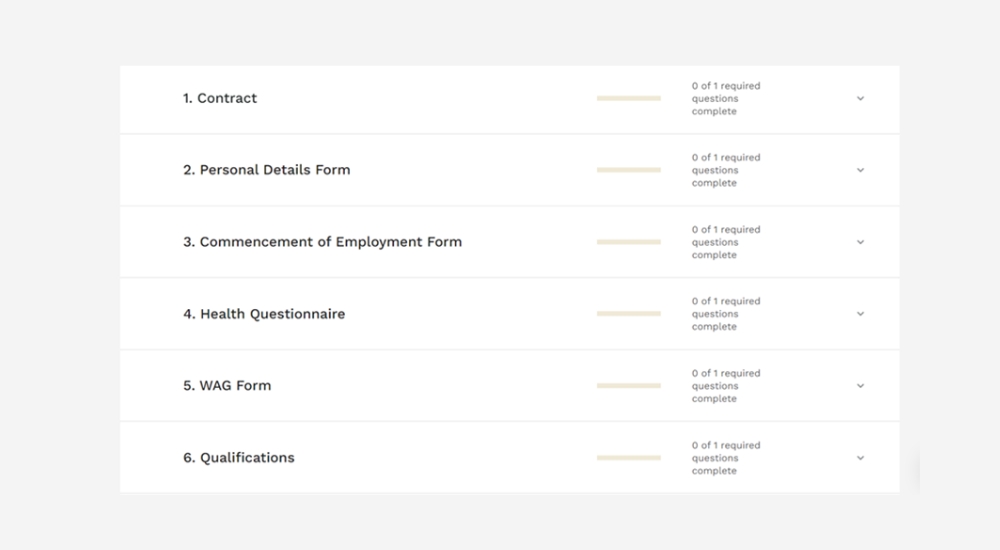
They can also start their DBS application through the portal, helping to speed the process up.
There is an Onboarding Dashboard, which at a glance shows the HR team the progress of the onboarding process for each vacancy. A quick email or phone call can provide a useful nudge if there is a delay in receiving acceptance of appointment back promptly.
Results: Application Data
The number and quality of applications has drastically improved since implementing the ATS:
Administration Assistant
- 7 Applications (Before) v 34 Applications (Post)
- 3 shortlisted (Before) v 8 Shortlisted (Post)
Lecturer in Animal Management / Equine Studies
- 12 Applications (Before) v 25 Applications (Post)
- 4 Shortlisted (Before) v 8 Shortlisted (Post)
Time to Hire
Key data gathered showed that in the six months since Pinpoint had been implemented, the number of applications had doubled, time from advert to offer reduced from 90 days to 28. Time to hire reduced substantially from 120 days to 41 days’ time to hire.
Equality Monitoring
At the time of the presentation, they had not yet started to use the Equality Monitoring facility of the platform but recognised this would be highly useful in not only fulfilling their Equality Monitoring duties, more easily, but that would highlight where specific actions would be helpful in increasing the diversity and understanding any equality issues relating to recruitment and shortlisting.
Cost
The ATS platform cost circa £10k.
Since Then…
- They have seen an increase in the number of applicants for senior level roles supporting successful appointments at the first time of advertising.
- Using the data gathered, they have streamlined their advertising methods and now tailor where they advertise based on the role. This has saved money on advertising and increased efficiency.
- Candidate feedback surveys have shown a net promoter score (NPS) of +43. However, whilst +43 is a fantastic score and shows the candidate satisfaction, the College uses candidate comments to make small continuous updates to the process all the time.
- The Talent pipeline is now standing at over 650 potential candidates
- The average number of applications per role continues to increase and recently they received over 50 applications and successfully recruited for 2 technical agricultural roles in very rural areas of Wales.
Tom’s hard work has been acknowledged across the college and the below endorsement from Coleg Sir Gar’s Principal, Andrew Cornish is testament to the impact that his work has had.
“As an employer, we constantly strive to appoint the very best staff to our business. The implementation of a new recruitment system has made such a positive impact in terms of improving business efficiency but also in terms of widening our network of engagement to attract new and experienced applicants. As a result we have seen:
- Significant reduction in our time to hire
- Significant increase in applications across all roles
- Better quality of candidates, and
- Increase in our employer branding.
The system is continually evolving and I’m looking forward to seeing further developments in the future”.
Andrew Cornish, Principal and Chief Executive Coleg Sir Gar.
Connect with Tom:- (2) Tom Braddock | LinkedIn